

CEPF is a joint initiative of l’Agence Française de Développement, Conservation International, the European Union, the Global Environment Facility, the Government of Japan and the World Bank.
Visitez le site français コア情報の日本語翻訳を読むOr use Google Translate to translate the English site to your language:
GTranslate
Investment
Ecosystem Profile
Stats
CEPF Strategy Strategy
About this hotspot About
Investment
Eligible Countries
Ecosystem Profile
CEPF's investment in the region focused on the Eastern Himalayas, which was originally part of the Indo-Burma Biodiversity Hotspot and included Bhutan, northeastern India and southern, central and eastern Nepal. In 2004, a hotspot reappraisal classified the region as part of two hotspots: Indo-Burma and the newly distinguished Himalaya.
CEPF played an instrumental role in improving the management of 750,000 hectares located across 11 Key Biodiversity Areas in the Eastern Himalayas. Our investment also supported the establishment of a network of more than 30 experts and conservationists, building new capacity for species conservation. In addition, five multi-stakeholder collaborative networks were either established or strengthened at various levels of decision-making and on numerous topics, signaling a new approach to conservation in a region that historically had been characterized by isolated and fragmented approaches.
A total of 1,500 households benefited directly from CEPF projects across a broad array of activities, including alternative and sustainable livelihood programs, park management implementation, sustainable agriculture, watershed management, and ecotourism.
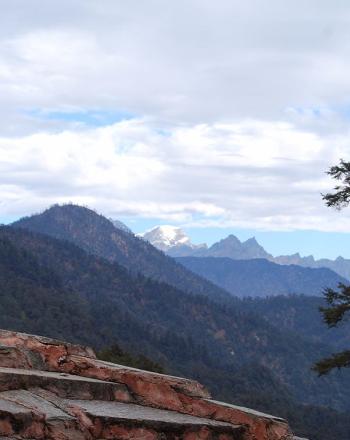
The youngest and highest mountain chain on Earth, the Himalaya stretches in an arc across northern Pakistan; Nepal; Bhutan; the northwestern and northeastern states of India adjoining Myanmar; and the southwest China border in the east.
The hotspot supports globally significant populations of several large mammals—including the Endangered tiger (Panthera tigris) and Endangered Asian elephant (Elephas maximus)—along with smaller mammals and birds such as the red panda (Ailurus fulgens) and white-winged duck (Asarcornis scutulata).
The rugged, and largely inaccessible, landscape of the Himalaya makes biological surveys in the hotspot difficult. Significant areas of intact forests are little or entirely unexplored. Thus, many floral and faunal taxonomic groups are understudied and the true extent of the biodiversity is undoubtedly underestimated.
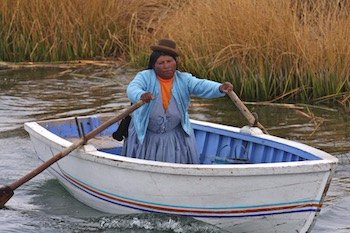
Many unique and diverse human groups are also found here. Nepal counts more than 27 ethnic groups, either of Tibetan-Burmese or Indo-Aryan descent, while Bhutan has three main ethnic groups—the Ngalongs, Sharchogpas and Lhotsampas—with many smaller groups having their own unique cultural practices. The northeast part of India, meanwhile, has more than 500 distinct ethnic groups.