
CEPF
Bookmark and Share

Eastern Arc Mountains & Coastal Forests 

Tab 1

Overview 
Kirk's red colobus, Zanzibar

The Eastern Arc Mountains and Coastal Forests region stretches along the Tanzanian and Kenyan coasts from the border with Somalia to the Mozambican border. Previously classified as a biodiversity hotspot itself, this region now lies within two newly classified hotspots: the Eastern Afromontane Hotspot and the Coastal Forests of Eastern Africa Hotspot.

Most of the region is in Tanzania, which takes in the Eastern Arc Mountains and the Rufiji water catchment. However, a narrow hook near the Kenya/Tanzania border follows the Eastern Arc Mountains to their northernmost limits in the Taita Hills in Kenya. The region also extends north to include the forests of the Lower Tana River in Kenya, and includes the Indian Ocean islands of Mafia, Pemba and Zanzibar.

The two distinct habitats of the Eastern Arc Mountains and Coastal Forests are notably fragmented, making threatened species within key sites highly vulnerable to extinction and further habitat loss. Agricultural encroachment, timber extraction and charcoal production are among the greatest threats.

Our support focuses on 160 sites that shelter the region's 333 globally threatened species. These species include, for example, the Endangered Zanzibar or Kirk’s red colobus (Procolobus kirkii) pictured above and found only in Zanzibar’s Jozani Forest.

Tab 2

Strategy 
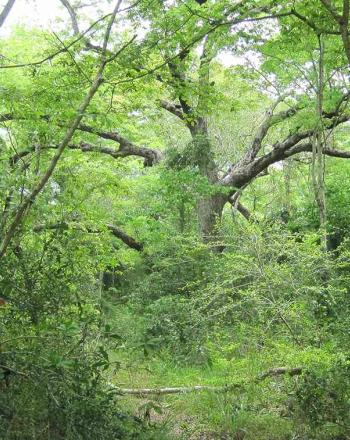
Ndundulu Forest, Udzungwas

Our investment in the Eastern Arc Mountains and Coastal Forests began in July 2003 to improve knowledge and appreciation of biodiversity among the local populations and stimulate support for conservation. In conjunction with this, a commitment to scientific best practices sought to improve biological knowledge in the region and show practical applications of conservation science.

Guided by an ecosystem profile developed with stakeholders, our investment focuses on conserving the region's globally threatened species and the 160 sites where they are found. Key parts of the strategy focus on select sites for maximum impact and on the linkages between people and conservation. Five strategic directions guide our approach:

  1. Increase the ability of local populations to benefit from and contribute to biodiversity conservation, especially in and around Lower Tana River Forests, Taita Hills, East Usambaras/Tanga, Udzungwas and Jozani Forest
  2. Restore and increase connectivity among fragmented forest patches, especially in Lower Tana River Forests, Taita Hills, East Usambaras/Tanga and Udzungwas
  3. Improve biological knowledge
  4. Establish a small grants program that focuses on Critically Endangered species and small-scale efforts to increase connectivity of biologically important habitat patches
  5. Develop and support efforts for further fundraising

We are now assessing our initial five years of investment based on experience and lessons learned, including monitoring of final project reports compiled by the many civil society groups supported. A workshop with stakeholders to contribute to the findings took  place in February 2009.

Tab 3

Priorities 

CEPF STRATEGIC DIRECTIONS CEPF INVESTMENT PRIORITIES
1.  Increase the ability of local populations to benefit from and contribute to biodiversity conservation, especially in and around Lower Tana River Forests; Taita Hills; East Usambaras/Tanga; Udzungwas; and Jozani Forest 1.1  Evaluate community-based forest management initiatives in the hotspot to determine best practices
1.2  Promote nature-based, sustainable businesses that benefit local populations
1.3  Explore possibilities for direct payments and easements (Conservation Concessions) for biodiversity conservation and support where appropriate
1.4  Build the capacity of community-based organizations for advocacy in support of biodiversity conservation at all levels
1.5  Support cultural practices that benefit biodiversity
1.6  Research and promote eco-agricultural options for the local populations
2.  Restore and increase connectivity among fragmented forest patches in the hotspot, especially in Lower Tana River Forests; Taita Hills; East Usambaras/Tanga; and Udzungwas

2.1  Assess potential sites in the hotspot for connectivity interventions
2.2  Support initiatives that maintain or restore connectivity
2.3  Monitor and evaluate initiatives that maintain or restore connectivity
2.4  Support best practices for restoring connectivity in ways that also benefit people
3.  Improve biological knowledge (all eligible sites) 3.1  Refine and implement a standardized monitoring program across the eligible sites
3.2  Support research in the less studied of the eligible sites
3.3  Monitor populations of Critically Endangered and Endangered secies
3.4  Support research in the hotspot to facilitate Red List assessments and re-assessments for plants, reptiles, invertebrates and other taxa
3.5  Compile and document indigenous knowledge on sites and species
3.6  Support awareness programs that increase public knowledge of biodiversity values
4.  Establish a small grants program (all eligible sites) that focuses on Critically Endangered species and small-scale efforts to increase connectivity of biologically important habitat patches 4.1  Support targeted efforts to increase connectivity of biologically important habitat patches
4.2  Support efforts to increase biological knowledge of the sites and to conserve Citically Endangered species
5.  Develop and support efforts for further fundraising for the region 5.1  Establish a professional resource mobilization unit, within an appropriate local partner institution, for raising long-term funds and resources for the region
5.2  Utilize high-level corporate contacts to secure funding from the private sector
5.3  Train local NGOs and community-based organizations in fundraising and proposal writing

Tab 4

Maps 
Eastern Afromontane and Coastal Forests biodiversity hotspots

Forest Cover and Change data on CI's Learning Network: Kenya c.1990-c.2000 (WinZip File - 6 MB)


Forest Cover and Change data on CI's Learning Network: Tanzania c.1990-c.2000 (WinZip File - 10 MB)

More Maps

Conservation Outcomes and Priority Areas for CEPF Investment, Eastern Arc Mountains and Coastal Forests of Tanzania and Kenya. Map (PDF - 1.9 MB)

1990 - 2000 Forest Cover and Change in Eastern Arc Mountains and Coastal Forests. Map (PDF - 5.8 MB)

Tab 5

Documents 
All documents pertaining to the Eastern Arc Mountains & Coastal Forests may be found on the documents page for the region.


Photos: Kirk's red colobus © Anup Shah/npl/Minden Pictures; Ndundulu Forest, Udzungwas © Francesco Rovero