CEPF
Bookmark and Share

Tab 1

Overview 
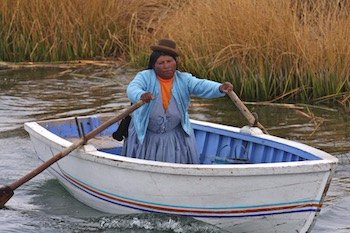
Women weaving in the Succulent Karoo Hotspot

Stretching along the Atlantic coast of Africa, from southwestern South Africa into southern Namibia, the Succulent Karoo biodiversity hotspot covers 116,000 square kilometers of desert. It boasts the world's richest variety of succulent flora, as well as high reptile and invertebrate diversity.

The hallmark of the Succulent Karoo is its exceptionally diverse and unique flora, especially succulents and bulbs. The hotspot is home to 6,356 plant species, 40 percent of which are found nowhere else. More than 900 are also threatened with extinction.

The hotspot’s biodiversity is under pressure from a range of human impacts, especially mining, crop agriculture, ostrich farming, overgrazing, illegal collection of fauna and flora, and anthropogenic climate change. Most of the region, an estimated 100,000 kilometers, is used for communal or commercial grazing. Although this land use can be compatible with the maintenance of natural resources, overgrazing has severely degraded much as this area.

Our support focuses on seven of the highest priority areas for conservation: Bushmanland Inselbergs, Central Namaqualand Coast, Namaqualand Uplands, Knersvlakte, Hantam-Roggeveld, Central Little Karoo and Sperrgebiet.

Tab 2

Strategy 
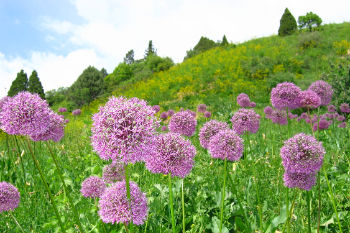
Flowers in the Succulent Karoo

Our strategy for this hotspot is based on the results of the Succulent Karoo Ecosystem Planning (SKEP) process. SKEP, which means "to serve" or "to create" in Afrikaans, developed a 20-year strategy for conservation and sustainable development in the hotspot as part of our preparation for investment.

SKEP, now the Succulent Karoo Ecosystem Program, developed an overarching framework for biodiversity conservation and sustainable development in the hotspot from which the best niche for CEPF investment could be determined. The SKEP vision is one we share: “The people of the Succulent Karoo take ownership of and enjoy their unique living landscape in a way that maintains biodiversity and improves livelihoods now and into perpetuity.”

The specific niche for CEPF in the hotspot has been to catalyze key activities in under-funded geographic priority areas using innovative mechanisms to achieve biodiversity conservation by involving specific land users such as the agriculture sector, mining companies and communal authorities. Six strategic directions guide CEPF's approach in the Succulent Karoo as outlined in the ecosystem profile for this region:

  1. Expand protected area corridors through public-private-communal partnerships in the priority areas of Bushmanland Inselbergs, Central Namaqualand Coast, Namaqualand Uplands, Knersvlakte, Hantam-Roggeveld, Central Little Karoo and Sperrgebiet.
  2. Engage key industrial sectors in meeting conservation objectives identified by SKEP.
  3. Retain and restore critical biodiversity in areas under greatest land-use pressure.
  4. Mainstream conservation priorities into land-use planning and policymaking.
  5. Increase awareness of the Succulent Karoo Hotspot.
  6. Create the capacity to catalyze the SKEP program.

We recently completed an assessment of our initial investment, including monitoring of final project reports compiled by the many civil society groups supported and a workshop with stakeholders to contribute to the findings.

Tab 3

Priorities 
CEPF STRATEGIC DIRECTIONS CEPF INVESTMENT PRIORITIES
1.  Expand protected area corridors through public-private-communal partnerships in the priority areas of Bushmanland-Inselbergs, Central Namaqualand Coast, Namaqualand Uplands, Knersvlakte, Hantam-Roggeveld, Central Little Karoo and Sperrgebiet 1.1  Establish catalyst teams responsible for mobilizing local stakeholder participation; securing necessary political support; consolidating baseline information on biodiversity for long-term monitoring; developing management plans that formalize roles of each partner; and creating strategies for long-term financial sustainability
2.  Engage key industrial sectors in meeting conservation objectives identified by SKEP 2.1  Promote best practices in the ostrich industry through pilot projects, policy recommendations and marketing options
2.2  Support mining forums of corporate and small-scale mining enterprises to discuss and develop mechanisms for addressing biodiversity concerns
2.3  Direct corporate investment into conservation projects that contribute to conservation targets and regional development objectives
2.4  Assist landowners in the development of ecotourism and natural resource-based enterprises that protect biodiversity
3.  Retain and restore critical biodiversity in areas under greatest land-use pressure 3.1  Conduct a rapid assessment to map grazing impacts in all geographic priority areas
3.2  Develop fine-scale conservation and monitoring plans for priority areas under greatest land use pressure where the impact of biodiversity conservation will be the most significant
3.3  Refine the conservation targets and establish a monitoring system for the targets and outcomes
3.4  Investigate mechanisms, such as direct payment and others, that will enable the creation of small conservation areas in priority areas under high land use pressures
3.5  Synthesize research on best grazing practices and implement outreach programs based on findings
4.  Mainstream conservation priorities into land-use planning and policy-making 4.1  Interpret conservation plans and design suitable products for municipal planners and other land-use decisionmaking agencies
4.2  Increase the capacity of agencies to use these products to integrate biodiversity concerns into their operations and policies
5.  Increase awareness of the Succulent Karoo hotspot 5.1  Increase awareness of the Succulent hotspot and its unique biodiversity among local, subregional and national constituencies through a binational awareness campaign
5.2  Support efforts to publicize the biological importance of the Succulent Karoo hotspot
5.3  Support projects that educate stakeholders about threatened and unique species in the hotspot
6.  Create the capacity to catalyze the SKEP program 6.1  Support a small network of locally based champions that will represent biodiversity concerns at a subregional level and assist with the identification, monitoring and mentoring of small-scale conservation projects
6.2  Establish a small grants program aimed at promoting small-scale development of biodiversity-based livelihood projects

6.3  Establish a coordination unit to lead implementation of the SKEP program, including providing technical assistance to launch components of the strategy, rapidly reviewing potential CEPF projects and leveraging additional resources to ensure long-term financial sustainability

7. Reinforce and sustain the conservation gains achieved as a result of CEPF investment in the initial 5-year investment period for the region.


Tab 4

Maps 
Succulent Karoo Biodiversity Hotspot

Tab 5

Documents 
All documents pertaining to Succulent Karoo may be found on the documents page for the region.
Fast Fact 
Succulent in quartz gravel ecosystem 
An unusual quartz gravel ecosystem in the Succulent Karoo supports high levels of plant endemism and diversity. 
Regional Resources 


Photos: Women weaving in the Succulent Karoo Hotspot © CI/Photo by John Martin; Succulent in quartz gravel ecosystem © C. Paterson-Jones; Flowers in Namaqualand © CI/Photo by Haroldo Castro