CEPF
Bookmark and Share

Tab 1

Overview 
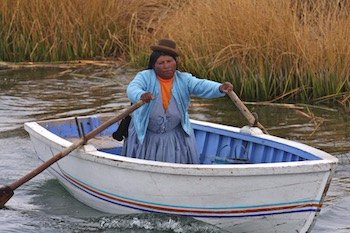
Women dancing in the Guinean Forests of West Africa Hotspot

The Guinean Forests of West Africa biodiversity hotspot is one of the most critically fragmented regions on the planet. Only 93,047 square kilometers, or 15 percent, of its original forest cover remains.

These biologically rich, yet fragile forests are home to an estimated 9,000 vascular plant species, about 20 percent (1,800 species) of which are unique to the region. More than a quarter of Africa’s mammals are also found here, including more than 20 species of primates.

Human activities are placing extreme stress on the forests, with the forests dramatically reduced to a series of fragments separated by agricultural communities and degraded lands. The result threatens not only species but the health of entire ecosystems that provide important benefits for people.

Our support focuses on the Upper Guinean Forest Ecosystem, which stretches from southern Guinea into eastern Sierra Leone and eastward through Liberia, Côte d'Ivoire and Ghana into western Togo.

Tab 2

Strategy 
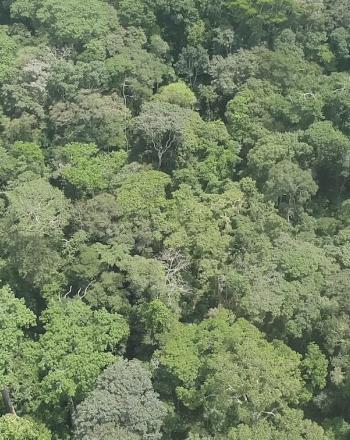
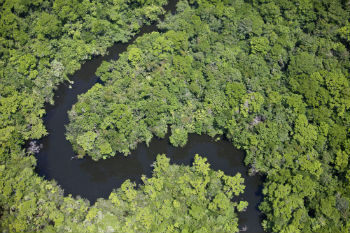
Aerial view of Liberia forest

Our investment in the Upper Guinean Forest Ecosystem began in December 2001 at a time when the region’s biodiversity was facing many formidable threats, with the most severe and pervasive being civil conflict. Tensions, warfare and post-conflict recovery in much of the region posed considerable obstacles to conservation efforts. Other threats, such as poverty, deforestation, mining and hunting, compounded the challenge.

Guided by an ecosystem profile developed with stakeholders, our initial five-year investment focused on not only ecological connectivity, but also political, social and administrative fragmentation. Five strategic directions guided our approach:

  1. Strengthening institutional capacity of local civil society groups for conservation
  2. Hotspot biodiversity monitoring system
  3. Promotion of the concept of biodiversity conservation corridors
  4. Collaborative public awareness, education and community outreach programs
  5. Small grants (Biodiversity Action Fund).

In December 2008, we began implementing a sixth strategic direction to reinforce and sustain the gains made possible by our initial $6.2 million investment. This new strategic direction includes $2.1 million in targeted grants to selected organizations based on a consolidation plan drawing from the original ecosystem profile and an assessment of our previous investment.

Tab 3

Priorities 


    CEPF STRATEGIC DIRECTIONS CEPF INVESTMENT PRIORITIES
    1.  Strengthening institutional capacity of local civil society groups for conservation 1.1  Workshops and/or training programs directed toward local NGOs. Examples:
    – proposal writing skills
    – conflict resolution
    – fundraising techniques
    – enterprise development
    – NGO management practices (financial & operational)
    – communication techniques
    – law enforcement (guards & rangers)
    1.2  Comprehensive biological surveys and other field activities, with the participation of local conservationists and groups as collaborators and trainers, carried out across the hotspot region involving hands-on training in several conservation-related themes
    1.3  Targeted surveys and assessments conducted to fill gaps identified in current provisions for existing national inventory programs.These targeted areas will be selected based on the following criteria:
    – Areas rated by the Conservation Priority-setting Workshop as having high needs for biological research
    – Areas rated from the Conservation Priority-setting Workshop as having high biological value
    – Areas from which the generated information will have immediate practical value to address priority management challenges
    – Areas in which biological assessments would be feasible, considering issues of political stability especially
    1.4  Support provided to the development of university networks such as:
    – exchange programs
    – collaborative research efforts
    – study programs
    2.  Hotspot biodiversity monitoring system 2.1  Support provided for the establishment of a hotspot-wide biodiversity database. Includes the participation, training and eventual employment of local individuals and groups
    2.2  Team established to maintain the monitoring system: to process collected data, input data into the system (database), ensure necessary dissemination mechanisms are in place and functioning
    2.3  Establishment of a baseline of current knowledge on regional and national level biodiversity indicators supported and incorporated into a Monitoring system. Includes supporting possible links to other systems such as the ECOWAS "Early Warning System" and/or ADB monitoring system.
    2.4  Development of a network to provide access for researchers, policy-makers, NGOs and managers
    3.  Promotion of the concept of biodiversity conservation corridors 3.1  Initiatives that identify threats to biodiversity concerns as well as possible integration opportunities into public and private sectors:
    – Roundtable policy dialogues
    – Participatory planning workshops
    – Regional/Binational conferences to develop best practices for various industries
    – Agroforestry, watershed management, mining, tourism, conflict resolution, health and other types of targeted projects.
    – Conservation finance assessments
    – Private sector conservation opportunities assessment
    – Targeted support for sustainable proetected area management efforts
    3.2  Opportunities for transfrontier conservation initiatives that involve multi-national participation supported. These might include as examples:

    Sierra Leone - Liberia where there is a need for:
    – rapid biological assessments
    – updating the current state of remote sensing

    Liberia - Cote d'Ivoire where there is a need for:
    – updating the state of scientific knowledge
    – conducting biological surveys
    – building capacity within forest development authority
    – reassessment of protected area network
    –measuring the impact of conservation activities on wildlife
    – development of regional tourism

    Cote d'Ivoire - Ghana where there is a need for:
    – law enforcement training
    – conservation education training
    – GIS/landuse management capability training

    3.3  Series of case studies developed and exchanges with Lower Guinea and other regions supporting the development of best practices for implementing transfrontier initiatives supported
    3.4  Mechanisms for corridor coordination
    3.5  Integration of socio-economic issues into biodiversity management and planning
    4.  Collaborative public awareness, education, and community outreach programs 4.1  National level awareness and information campaigns funded to:
    – educate consumers about impacts of bushmeat trade & unregulated hunting
    – inform judiciaries about wildlife laws and regulations
    – conduct flagship species awareness programs (manatees, sea turtles and others)
      4.2  Support to grassroot & NGO activities in innovative programs such as enterprise development and environmental education.

        5.  Small grants (Biodiversity Action Fund) 5.1  Fast response mechanism provided to address immediate, unpredicted biodiversity conservation needs within the region. Individual grants not to exceed $10,000.
        6.  Reinforce and sustain the conservation gains achieved as a result of the initial 5-year CEPF investment in this region 6.1  Ensure financial sustainability in the hotspot
          6.2  Integrate livelihoods and community participation into the conservation agenda through a mentored small grants program
            6.3  Secure and sustain capacity building gains through targeted conservation action

              Tab 4

              Maps 
              Guinean Forests of West Africa Biodiversity Hotspot


              Forest Cover and Change data on CI's Learning Network: Liberia c.1990-c.2000 (WinZip File - 11 MB)


              More Maps

              Results of Conservation Priority-Setting Workshop, 1999. Maps

              Tab 5

              Documents 
              All documents pertaining to the Guinean Forests of West Africa may be found on the documents page for the region.


              Photos: Women dancing © CI/photo by Nina Marshall; Aerial view of Liberia forest © CI/photo by John Martin